
Updated 3 September 2026: OpenAI reversed its policy on 31 August 2026. Law firms can now advertise legal services on ChatGPT in the United States, provided the advertiser is licensed to practise law in the jurisdiction where the ad is shown. Legal-services advertising remains prohibited outside the US. Ads still won't appear in sensitive conversations, still only reach Free and Go tier users, and firms must still comply with their state bar's attorney-advertising rules regardless of what OpenAI now permits.
The Short Answer
Yes, with conditions. On 31 August 2026, OpenAI removed legal services from its disallowed-ads category for the United States. A law firm can now run ChatGPT ads promoting legal advice, representation and services, including personal injury, immigration and document preparation, provided the advertiser holds a valid licence to practise law in the jurisdiction where the ad is displayed. Outside the US, legal-services advertising remains prohibited.
That's a genuine reversal, not a clarification, and it happened fast: this space has now moved three times in seven months. What hasn't changed is everything downstream of eligibility. Ads still only reach Free and Go tier users, still won't appear in conversations ChatGPT flags as sensitive, and a platform allowing an ad has never been the same thing as that ad being compliant with your state bar's advertising rules.
US firms can now genuinely test ChatGPT ads, with real guardrails. Confirm the advertiser licence matches the display jurisdiction, get your landing page and creative checked against your bar's attorney-advertising rules before launch, and treat the sensitive-conversation exclusion as a real limit on when you'll actually be seen, not a technicality.
But the bigger, more durable opportunity hasn't moved: earning a citation inside ChatGPT's actual answers costs nothing per click and doesn't depend on a policy that's already flipped three times this year. We'd still build that first, ads second.
What ChatGPT Ads Actually Are
OpenAI began testing sponsored placements inside the ChatGPT app in February 2026, then opened a self-serve Ads Manager to US businesses more broadly through the year. A ChatGPT ad appears as a clearly labelled sponsored card that sits below the assistant's written answer, it never sits inside the answer itself and never changes what the model says.
The targeting model is genuinely different to Google Ads. Instead of bidding on keywords or audience segments, advertisers write context hints, short descriptions of the kind of conversation their ad should sit beside. A firm doesn't target "personal injury searchers aged 25 to 54." It describes someone asking what to do after a car accident.
Ads are shown only to people on the free tier and the lower-cost Go tier, not to paying Plus or Pro subscribers. Ad matching happens inside OpenAI's own infrastructure using anonymised signals; personal conversation data isn't shared with advertisers directly.
The Timeline: From Ban to Reversal
This space has moved fast. Here's the sequence.
- February 2026
OpenAI begins testing sponsored placements inside ChatGPT for Free and Go tier users, in a limited pilot.
- April 2026
OpenAI stops categorically blocking ads from appearing around medical, legal and financial advice conversations, a placement change, not yet a change to who could advertise.
- 5 May 2026
The self-serve Ads Manager opens broadly, with CPC bidding and no minimum spend. Legal services are still excluded as an advertiser category at this point.
- 4 June 2026
OpenAI explicitly reaffirms legal services as disallowed, naming immigration, personal injury, legal claims and document preparation directly.
- 31 August 2026
OpenAI reverses course. Legal-services advertising becomes permitted in the United States, provided the advertiser is licensed to practise law in the jurisdiction where the ad is shown. Legal-services ads remain prohibited outside the US.
The August 31 Reversal, in Plain English
The change is narrower than "legal ads are now allowed." It's specifically about advertiser eligibility, and it comes with a licensing condition attached: the advertiser has to be properly licensed to practise law in the jurisdiction the ad is displayed in, not just wherever the firm happens to be based. Legal education and legal media ads were already permitted before this change and remain permitted now, so firms have a genuine choice between advertising services directly or sticking with educational content, rather than educational framing being the only workaround available.
What the reversal didn't touch is where ads can appear. The sensitive-conversation exclusion, covered next, is now the more important limit for law firms than eligibility itself.
It's About Where the Ad Shows, Not Where Your Firm Is
Firms need to think about this correctly. A California-licensed firm's ad can show to a ChatGPT user OpenAI determines is in California. It generally can't show to a user in a state that firm isn't licensed in, regardless of where the firm's office sits. That's a meaningfully different targeting problem than a firm is used to solving with Google Ads, where geographic targeting is a business choice, not a licensing constraint enforced by the platform.
This reversal doesn't apply to you yet. The August 31 change opened legal-services advertising in the United States only. Legal-services ads remain prohibited on ChatGPT in Australia, the UK, Canada and every other market outside the US, regardless of how the policy language reads for American advertisers.
That's not a loophole worth chasing. It means the organic AI visibility work covered later in this piece, reviews, accreditation, directory listings, authored content, is currently the only lever Australian firms have to influence who ChatGPT recommends, and it's worth building now rather than waiting to see if OpenAI extends ad eligibility beyond the US.
Where Ads Still Won't Appear: The Sensitive-Conversation Limit
This is the part worth paying closest attention to, because it directly affects when your ad spend actually reaches anyone.
Some of the conversations most likely to produce a high-value legal matter happen in genuinely distressing circumstances, someone describing a death in a drink-driving accident, possible nursing-home abuse, or leaving an abusive relationship with children involved. ChatGPT doesn't show ads in conversations it classifies as sensitive, and those are often exactly the moments a firm would most want to be present in.
Ads can still reach people during adjacent, less acute research, someone asking about a filing deadline, typical probate-lawyer fees, or whether a first DUI is charged as a misdemeanour. That's genuine legal intent, just usually earlier in the research stage rather than at the point of crisis. Organic visibility still matters here too: even when no ad shows, ChatGPT can still answer with cited sources, and a firm's own website can be one of them.
Why OpenAI Drew the Line Where It Did
Legal, healthcare and financial services carry the highest regulatory and reputational risk of any advertising category, which is why every platform treats them most cautiously at launch and only opens them once a compliance framework exists to support it. Google Ads has run a comparably tight certification and landing-page review process for legal advertisers for years, and OpenAI's approach, licensing checks plus jurisdiction-matched delivery plus a sensitive-conversation carve-out, reads like the version built for a surface where the assistant's answer already carries more implied trust than a list of blue links.
The upside for firms that get this right early: for months, the only firms showing up in a ChatGPT answer about needing a lawyer were the ones cited organically. That's still largely true outside the newly-opened ad inventory, and it's still the strongest argument for building genuine AI visibility rather than treating advertising as the whole strategy.
What to Check Before You Run an Ad
OpenAI's rules aren't the only rules that apply. Before you brief an agency or set up a campaign, work through this list.
- Does the advertiser licence actually match the display jurisdiction? Geographic targeting now has to line up with where each named advertiser is licensed to practise, not just where the firm's office is. Get this confirmed in writing by whoever manages the campaign.
- Does the creative and landing page meet your bar's advertising rules? OpenAI permitting an ad doesn't make it compliant. US firms remain governed by state bar rules and ABA Model Rules 7.1–7.3 on advertising and solicitation regardless of what OpenAI now allows; UK firms by the SRA Code; Canadian firms by their provincial law society and the Federation's Model Code; Australian firms by the Legal Profession Uniform Law and their state Legal Services Commissioner.
- Could the format read as targeted solicitation? Conversational ad placement is new enough that this hasn't been tested by every regulator. Have it checked rather than assumed.
- Are mandatory disclaimers actually present where your jurisdiction requires them? A results section or fee claim that would need qualifying language on your website needs the same qualifying language here.
- Can OpenAI's crawler actually reach your landing page? Firewalls, bot protection or an overly aggressive robots.txt can block the review process the same way they block AI crawlers generally, worth checking regardless of whether you advertise.
None of that means don't test it. It means the addressable audience is genuinely narrower than the headline "legal ads are now allowed" suggests, Free and Go tier only, sensitive conversations excluded, licensing-matched delivery, so whether it's worth the spend depends on your firm's own economics, not just eligibility.
Why Organic AI Visibility Still Matters More
Even with the door now open, paid ChatGPT placement is best treated as a bridge or a targeted supplement, useful while entering a new practice area, opening a new location, or waiting for a new website to earn organic visibility, not a substitute for it. An ad generates traffic only while you keep paying for it. A strong practice-area page keeps earning visibility, in both classic search and AI answers, every month after you stop paying for anything.
This is the shift we've written about before. A major structural change has happened in 2026: ChatGPT citations and Google rankings have stopped tracking each other. Only around 7% of ChatGPT citations also rank in Google's top 10 for the same query. Ranking first on Google for "personal injury lawyer in your city" no longer guarantees you're the firm ChatGPT recommends when someone asks it the same question conversationally, which the data shows they now do at a materially higher rate for legal services than almost any other professional category. Firms that already had useful, accessible content were the ones with somewhere worthwhile to point an ad the moment the door opened, the same pages that earned organic AI visibility during the months ads were banned entirely.
What Earns Citation Share in 2026
Citation share isn't won the same way search rankings are. It's earned through a specific, verifiable set of signals that the models weight when deciding who to name.
- Accreditation. Verifiable, third-party credentials like Law Society or state bar specialist accreditation carry real weight, they're a signal the model can check, not a claim it has to take on faith.
- Peer-review directories. Listings like Doyle's Guide or Best Lawyers, pay-to-play as they are, remain some of the most potent external signals currently observed feeding AI recommendations.
- Google review volume and recency. In markets where accreditation and directory listings are thin, the models fall back heavily on review volume, and currency matters as much as count, a hundred reviews from four years ago won't earn a mention.
- Named-attorney content with jurisdictional specificity. Generic practice-area copy performs worse than content tied to a specific lawyer's credentials and a specific state, province or territory's law.
- A clean off-site footprint. Consistent name, address and phone details across every directory and profile, clean schema markup, and a genuine media or press presence all compound.
None of that is exotic. It's the same review-engine, authority-listing and authored-content sequence we walk clients through in our AEO work, it just now carries more weight than ever, precisely because the paid door is shut. It sits alongside the broader AI & technology work we do with firms, including custom GPTs trained on a firm's own knowledge, which increasingly shapes how consistently a firm's expertise shows up across every AI surface, not just ChatGPT.
Run This Diagnostic This Afternoon
You don't need an agency to find out where you currently stand. This takes twenty minutes.
- Ask ChatGPT who the best firm is in your practice area and city.
Use the exact phrasing a prospective client would. If you're not named, ask it directly why not, and ask what would change that.
- Check whether a sponsored card appears at all.
If you see one for a competitor, note the framing and the disclaimers, it's a live read on how firms are actually using the new ad category, not just the policy on paper.
- Audit your accreditation and directory footprint.
Are your lawyers' specialist accreditations, Doyle's or equivalent listings, and law society registrations all current, consistent and easy for a model to verify?
- Check review recency, not just count.
If your last batch of reviews is more than twelve months old, that's a gap worth closing before anything else on this list.
- Search for your own name alongside "reviews" and "complaints."
See what a model would find if it went looking for corroborating or contradicting signals about your firm.
What to Actually Do This Quarter
Build your review engine into a repeatable monthly process rather than a one-off campaign, keep your accreditation and directory listings current and consistent, and get named-attorney content live under real bylines with genuine jurisdictional specificity. That's the work that compounds no matter what OpenAI's ad policy does next, and it's the same work that makes any ad spend you do run actually convert once someone clicks through.
If you want to test ChatGPT ads now that they're open, do it on a defensible budget, get the licensing and jurisdiction targeting confirmed in writing rather than assumed, and have your professional-conduct rules checked against the actual creative before it goes live, not the category in general.
And keep watching. This is a policy that's moved three times in seven months. The firm best placed to make ChatGPT ads actually work is the one that already built the organic visibility that gives an ad somewhere worthwhile to land, not the one treating the ad as the whole strategy. See our Practice Proof AI page for how we're applying that thinking across search, content and firm operations right now.
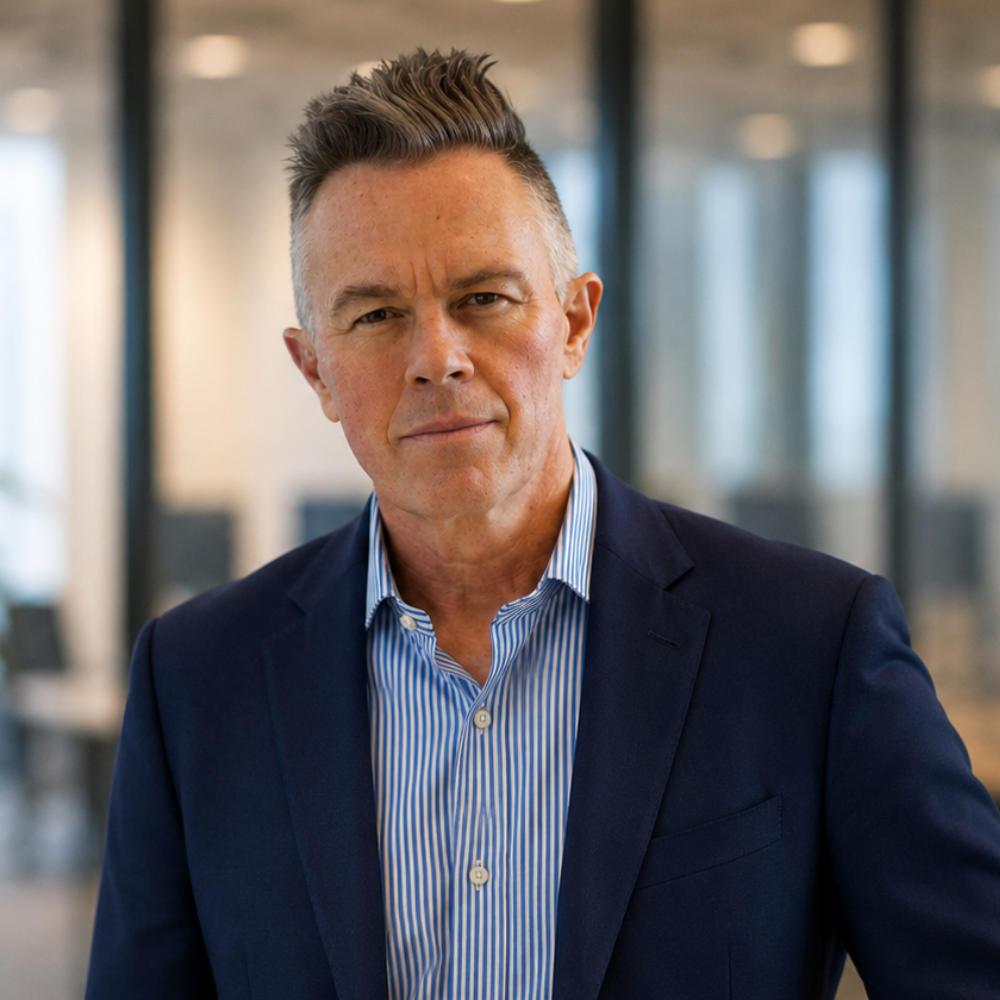
Dan Toombs
Lawyer & Founder, Practice Proof
Dan Toombs is a lawyer, law reformer and founder of Practice Proof. Admitted in 1997, he built his first career inside the legal profession — practising law, leading legal organisations and driving law reform — before building the marketing, technology and AI practice he has now run exclusively for law firms for 20 years.
In that time, Dan and his team have helped law firms grow from single offices into multi-office and national practices, ASX-listed brands and acquisition targets. That experience gives Practice Proof an unusually deep understanding of both sides of law firm growth: what happens inside a legal practice, and what it takes commercially to make one grow.
Thomson Reuters featured his law-firm marketing advice as early as 2014, on positioning firms to win business online, websites and social media. He is also the founder of FirmRanker, which researches how AI systems discover and recommend law firms. Dan is a Winston Churchill Fellow and Australia Leadership Award recipient, with national recognition for his work in law and human rights.
If you want to know what 20 years of growing law firms could bring to yours, talk to Dan and the Practice Proof team.